Table of Contents
ToggleFinding ants marching across your kitchen counter or crawling through your pantry is frustrating, and often the first instinct is to reach for a chemical spray. But before you do, consider making your own homemade ant killer. DIY ant control solutions are safer for families and pets, cost just a few dollars, and often work as well as (or better than) store-bought options. Whether you’re dealing with a small invasion or a full-blown infestation, these five proven methods give you practical, affordable ways to take back your home.
Key Takeaways
- Homemade ant killer solutions like borax-and-sugar bait and diatomaceous earth are safer for families and pets than commercial sprays while costing just a few dollars to make.
- The borax-based ant control formula works by tricking ants into carrying poison back to their colony, eliminating the problem from within rather than just killing surface scouts.
- Natural deterrents such as cinnamon, ground coffee, and essential oils prevent ant invasions by disrupting their navigation trails, making them ideal for prevention and non-toxic barriers.
- Vinegar and dish soap spray kills ants on contact and clears visible activity quickly, but must be combined with colony-targeting methods like borax bait for complete infestation control.
- Consistency and proper placement are crucial for success: position bait stations along actual ant trails, seal entry points with caulk, and reapply treatments every 2–3 weeks for lasting results.
- For maximum effectiveness, layer multiple homemade ant killer methods—borax bait for the nest, deterrents as prevention, and vinegar spray for immediate cleanup—rather than relying on a single approach.
Why Homemade Ant Killers Are Worth Trying
Homemade ant killers solve a real problem for most homeowners: they work without exposing kids, pets, or yourself to harsh chemical residues. Commercial sprays often contain pyrethroids or neonicotinoids, which are effective but can linger on surfaces and in the air long after application.
DIY solutions use ingredients already in your home, borax, cinnamon, vinegar, dish soap, so you control exactly what you’re using. Many of these methods target ant colonies directly rather than just killing scouts on your counter, which means longer-lasting relief. They’re also genuinely cheaper: a batch of borax-based ant killer costs less than $2 and treats an entire home, compared to $8–$15 per commercial spray.
The catch? Homemade methods require patience and consistency. Ants don’t vanish overnight. You’ll need to reapply treatments, seal entry points, and remove food sources simultaneously. But if you’re willing to put in the effort, these solutions deliver real results without the chemical smell or cost.
Borax and Sugar: The Classic Ant Control Formula
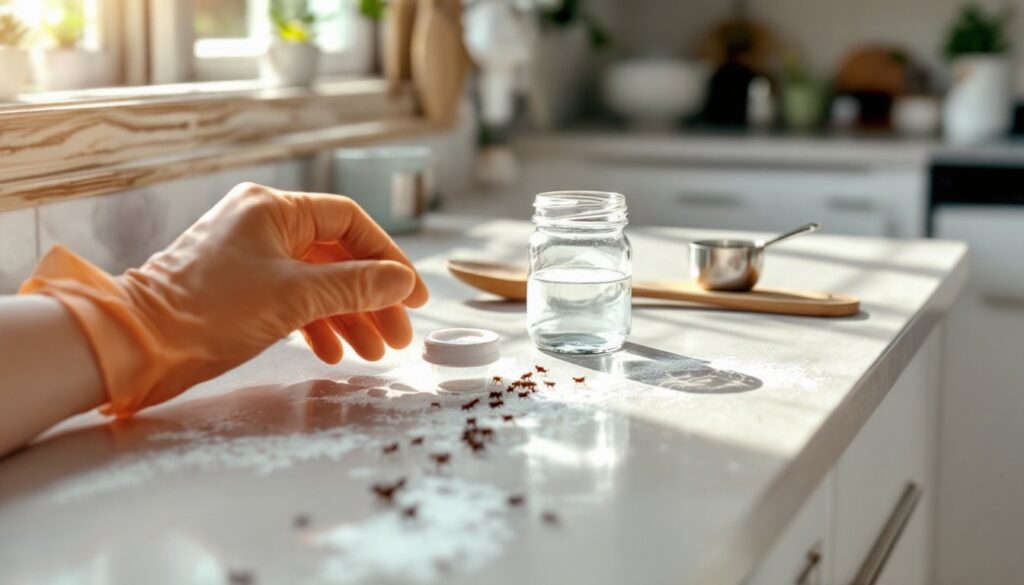
The borax-and-sugar mixture is a time-tested formula that works because it tricks ants into carrying poison back to the colony. Borax (sodium tetraborate) is a naturally occurring mineral that disrupts an ant’s digestive system, but only works if ants consume it, which is why the sugar bait is crucial.
What You’ll Need:
- 1 cup powdered sugar
- 2 tablespoons borax (found in the laundry aisle)
- 1 cup water
- Small jars or bottle caps
- Spoon or small mixing container
Step-by-Step Instructions:
- Mix the sugar, borax, and water in a jar until fully dissolved. The mixture should be clear and liquid, not pasty.
- Pour small amounts into bottle caps or shallow containers and place them along ant trails, near baseboards, or outside entry points.
- Leave the bait stations undisturbed for 3–7 days. Ants will carry the liquid back to their nest, poisoning the colony from within.
- Reapply every 2–3 weeks or when the liquid dries out.
Safety Note: Borax is toxic in large quantities. Keep bait stations away from children and pets. If you have young kids or curious pets, place stations inside cabinet corners or under appliances where they can’t access them. Wash your hands after handling borax, and don’t inhale the dust when mixing. Borax is generally recognized as safer than synthetic pesticides, but it’s not risk-free, handle with care.
Cinnamon, Coffee, and Natural Deterrents
Not all ant solutions kill, some simply repel. Cinnamon, ground coffee, citrus peels, and essential oils are natural deterrents that ants actively avoid. These won’t eliminate an existing colony, but they’re excellent for preventing new invasions and for areas where you want a non-toxic barrier.
Cinnamon and ground coffee work because their strong scent overpowers the chemical trails ants use to navigate. Sprinkle cinnamon powder directly along baseboards, window sills, and entry points. It’s completely safe around kids and pets, though you’ll need to reapply after vacuuming or sweeping, and after rain if you’re using it outdoors.
Coffee grounds work similarly and have the bonus benefit of being free if you already brew coffee at home. Let grounds dry completely, then scatter them around garden beds, patios, or ant-prone areas outside. Citrus peels (lemon, orange, grapefruit) also irritate ants: crush them and place them near problem spots, or mix the juice with water and spray around entry points.
Essential oils like peppermint, tea tree, and clove are potent deterrents. Mix 10–15 drops into a spray bottle with 1 cup of water and spray entry points weekly. These methods create an inhospitable environment without killing ants, they’ll simply move elsewhere. For active infestations inside your home, combine deterrents with a lethal method like borax bait for complete control.
Diatomaceous Earth: Nature’s Microscopic Solution
Diatomaceous earth (DE) is a powder made from fossilized algae with microscopic sharp edges. When insects crawl through it, the edges damage their exoskeletons, causing dehydration and death. It’s non-toxic to humans and pets because the particles are too small to harm larger animals’ internal tissues, though you should avoid inhaling the dust.
What You’ll Need:
- Food-grade diatomaceous earth (CRITICAL: never use pool-grade, which is chemically treated)
- A dust mask
- A powder duster or old salt shaker
Sprinkle food-grade DE along ant trails, around baseboards, under appliances, and in cabinet corners. Reapply after cleaning or if the powder gets wet, DE loses effectiveness when damp. Outdoors, dust DE around the perimeter of your home, garden beds, and pathways where ants congregate.
DE works best as a perimeter control and takes 3–5 days to eliminate a population because it relies on direct contact. It’s less effective than borax bait for treating established colonies, but it’s excellent for long-term prevention when used consistently. The main downside is the dust: always wear a dust mask when applying, and keep it away from air vents to prevent spreading fine particles throughout your home. Many DIYers use DE outdoors and borax bait indoors for the best results.
Vinegar and Dish Soap Spray Method
A vinegar-and-dish-soap spray is a fast-acting surface spray that kills ants on contact and disrupts their scent trails. Unlike borax bait, this method doesn’t poison the colony, so it’s best for cleaning up visible ants and preventing new invasions rather than solving a deep infestation.
What You’ll Need:
- 1 cup white vinegar
- 1 cup water
- 1 teaspoon dish soap
- Spray bottle
Mixing Instructions:
- Combine vinegar, water, and dish soap in a spray bottle and shake well.
- Spray directly on ants and along their trails on counters, floors, and baseboards.
- Wipe clean with a cloth after 15–30 minutes.
- Spray entry points daily for a week, then as needed.
The vinegar smell is strong but fades quickly as it dries. The soap breaks down the ants’ waxy protective coating, killing them faster than vinegar alone. This method is completely safe for food-contact surfaces, kitchens, and anywhere you need a non-toxic approach.
For maximum effectiveness, combine this spray with other methods: use vinegar spray to clean up immediate ant activity, place borax bait to eliminate the colony, and apply cinnamon or DE as a preventive barrier. Sprays work great for damage control, but they don’t address the root problem, the nest itself. Professional ant removal guides often recommend layering multiple tactics for faster, lasting results.
Application Tips and Safety Precautions
Success with homemade ant killers depends as much on application strategy as the recipe itself. Start by identifying ant entry points, usually small cracks, gaps around pipes, or spaces under doors. Seal obvious cracks with caulk before you apply treatments: otherwise, you’re treating the symptom, not the source.
Placement matters. Ants follow chemical trails, so position bait stations along the paths you see them traveling, not randomly around the room. Check bait stations every 2–3 days: if ants are swarming them, leave them in place. If there’s no activity after a week, move them to a new location.
General Safety Reminders:
- Always wear nitrile gloves when handling borax or DE to avoid skin contact and accidental ingestion.
- Use a dust mask when applying powder-based methods like DE or cinnamon to prevent inhaling fine particles.
- Keep all homemade treatments away from pet food and water bowls, and store ingredients in clearly labeled containers separate from cooking ingredients.
- If children live in your home, place bait stations in inaccessible locations, inside cabinet corners, behind appliances, or in the garage.
Outdoors, apply treatments in dry weather: rain washes away powder and dilutes liquids, requiring reapplication. Inside, avoid spraying vinegar mixtures on electronics or near electrical outlets.
One final point: homemade ant killers work best for prevention and light infestations. If you’re dealing with carpenter ants or a massive fire ant colony, a licensed pest control professional is worth the investment. They have access to professional-grade baits and can identify structural damage that ants may have caused. For typical household ant invasions, though, these DIY methods are reliable, affordable, and genuinely effective.
Conclusion
Homemade ant killers prove that you don’t need harsh chemicals or expensive exterminators to solve a pest problem. Borax bait targets colonies, natural deterrents prevent reinvasion, vinegar spray handles visible ants, and diatomaceous earth provides ongoing protection. The key is consistency: apply treatments regularly, seal entry points, and remove food sources. Within 2–4 weeks, you’ll see a noticeable decline in ant activity. Start with the method that fits your situation, borax for active nests, deterrents for prevention, and adjust as needed. Your home will be ant-free, your wallet fuller, and your peace of mind restored.