Table of Contents
ToggleSpace constraints in modern homes have made stackable washer and dryer units increasingly popular, especially for apartments, condos, and smaller laundry rooms. Home Depot carries a solid range of stackable models that balance affordability, reliability, and features. Whether you’re replacing aging appliances or setting up a laundry room from scratch, understanding what’s available and what matters for your situation will save you time and money. This guide walks through the best options, key specs to evaluate, and what installation entails so you can make an informed choice.
Key Takeaways
- A Home Depot stackable washer and dryer footprint of 27 inches wide by 75 inches tall saves significant space compared to side-by-side units, making them ideal for apartments and small laundry rooms.
- Budget-friendly stackable sets at Home Depot start around $800–$1,200, while premium WiFi-enabled models range from $1,500–$2,500+ and offer faster spin speeds, larger capacities, and smart home integration.
- Ventless (condensing) dryers eliminate the need for exterior ducting and are crucial for interior laundry rooms or apartments without duct access, though they dry 10–15 minutes slower than vented models.
- Proper installation requires a dedicated 20-amp circuit for washers and a 240-volt outlet for dryers; hiring a licensed electrician ($300–$600) ensures code compliance rather than attempting DIY work.
- Monthly washer drum cleaning with vinegar, annual hose inspections, and lint filter maintenance before every dryer load are essential routines that prevent costly repairs and extend appliance lifespan.
Why Choose a Stackable Washer and Dryer
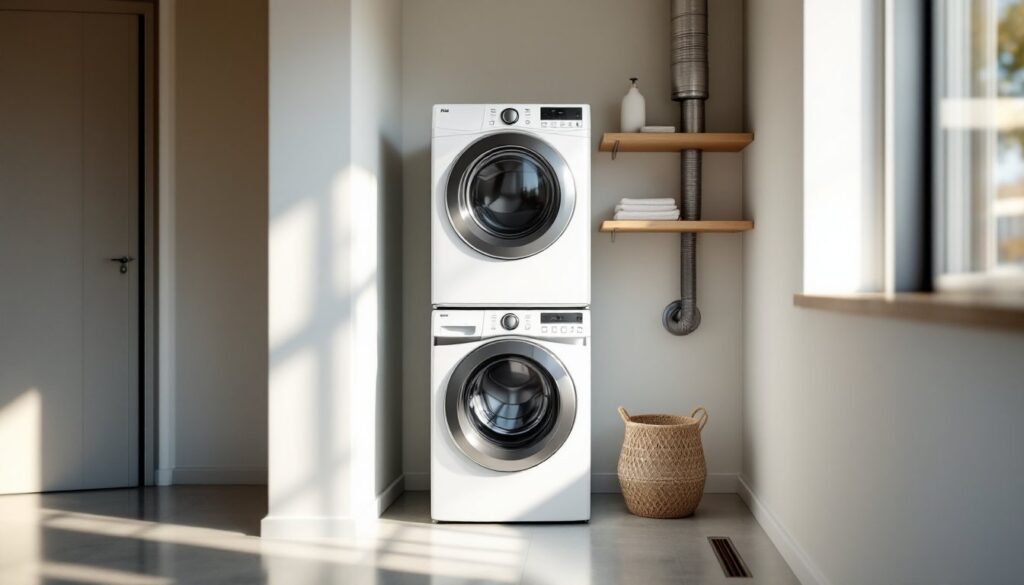
Stackable units solve a fundamental problem: they fit where traditional side-by-side appliances simply don’t. A stacked washer and dryer footprint is roughly 27 inches wide and 75 inches tall, compared to 54+ inches for two units side-by-side. This matters in apartments, small homes, and laundry closets where every inch counts.
Beyond footprint, stacked units offer practical advantages. They’re easier to load and unload at waist height without bending, particularly for the dryer when positioned on top. Many modern stackable dryers include moisture sensors that stop the cycle when clothes are dry, cutting energy waste and reducing wear on fabrics. Washer cycles have also improved, weighted detergent dispensers, fabric care cycles, and faster spin speeds mean better results in less time.
Cost is another factor. Buying a stackable combo typically runs 20–30% less than purchasing a premium washer and dryer separately. Home Depot frequently runs promotions on stacked sets, especially during seasonal sales in spring and fall. Delivery and haul-away of old appliances is often included with purchase over a certain threshold, which simplifies logistics.
One trade-off: capacity. Stackable units usually offer smaller tub sizes than full-size washers, think 4.5–5.0 cubic feet rather than 5.5+. If you wash large loads regularly (bedding for a family of four, heavy comforters), this limitation matters. Running extra cycles eats time and adds to water and energy bills.
Top Stackable Models Available at Home Depot
Home Depot’s stackable selection spans electric and gas dryers, ventless and vented options, and washers with different agitator or impeller designs. The range ensures most budgets and preferences find something suitable.
Budget-Friendly Options
Entry-level stackable sets at Home Depot start around $800–$1,200 for the pair. Models in this range typically use traditional agitator washers (a central post that churns clothes), which are durable and handle heavy soils well. Dryers are usually vented and electric, with basic moisture-sensing. Brands like GE, Maytag, and LG dominate the budget tier.
A popular budget pick is the GE 4.5 cu. ft. washer with a top-load agitator paired with a 7.0 cu. ft. electric dryer. The washer’s water-level options let you match load size, and the dryer’s multiple heat settings handle delicate fabrics. Temperature control and basic cycles are straightforward, no WiFi frills, but reliable operation. Real homeowners report good durability at this price point with standard maintenance.
If you prefer gentler washing, some budget models use an impeller design instead, a low-profile rotor that tumbles rather than churns. These are quieter and use less water, but don’t always handle heavy soil as effectively. Decide based on your typical laundry (mostly everyday clothes vs. work wear and heavy bedding).
Premium and Feature-Rich Models
At $1,500–$2,500+, premium stackable sets add smart features, larger capacities, and advanced cycles. LG and Whirlpool lead here, offering WiFi connectivity, app-based alerts, and AI wash recommendations.
The LG 5.0 cu. ft. washer with TurboSteam and matching dryer represents this segment well. The washer includes a steam option to reduce wrinkles and allergens, and its AI sensor adjusts water and detergent based on load weight. The dryer is ventless (condensing), which means no exterior vent is needed, crucial for interior laundry rooms or apartments without duct access. WiFi lets you start, pause, or monitor cycles from your phone, which appeals to busy households.
Ventless dryers trade faster dry times for flexibility in placement. They’re 10–15 minutes slower per load than vented models but eliminate the need for external ducting. Condensing dryers extract moisture by cooling air, collecting water in a tank you empty or drain continuously via a floor pan. Energy Star certified models run $100–$200 more upfront but recover that over 3–5 years through lower utility bills.
Wash cycles matter at this tier. Premium models offer fabric-specific programs (delicate, quick wash, heavy duty), temperature control, and deep-fill options for heavily soiled loads. Some include allergen-removal cycles with extended hot water and extra rinses, useful for households with sensitivities. These extras justify the price for families doing 6+ loads per week or running specialized laundry frequently.
According to recent reviews, smart models consistently rank highest for convenience and reliability in 2026.
Key Features to Compare Before Buying
Beyond brand and price, several features directly affect usability and long-term satisfaction. Prioritize them based on your situation.
Capacity and tub design set the foundation. Washers with 4.5+ cubic feet handle most household loads comfortably. A 5.0+ cu. ft. capacity accommodates larger items (king bedding, comforters) without multiple cycles. Check whether the dryer capacity matches proportionally, a 7.0 cu. ft. dryer pairs well with a 4.5+ cu. ft. washer to avoid drying in batches.
Spin speed matters more than people expect. Higher spin speeds (up to 1,200 RPM) extract more water during the rinse cycle, reducing dryer time and heat exposure. This is especially important for dryer longevity since shorter drying cycles mean less mechanical stress. Budget models spin at 600–800 RPM: premium models hit 1,000–1,200 RPM.
Vent or ventless is crucial and non-negotiable. Vented electric dryers are fastest and cheapest. Ventless (heat pump or condensing) dryers are flexible but slower. Gas dryers (both vented and some ventless models) dry faster than electric but require a gas line and professional installation. If your home has no gas line, don’t let a salesperson pressure you, gas retrofitting costs $500+.
Noise levels affect household peace. Impeller washers and heat pump dryers run quieter than agitator washers. If your laundry room is near bedrooms or a living space, low-noise models reduce annoyance, especially during night cycles.
Smart features include WiFi, app control, and machine learning. They’re convenient for busy households but add $200–$400 to cost. Decide if you’ll actually use remote start or notifications. Features should enhance your life, not just bulk up the price tag.
Installation and Space Considerations
Installing a stackable unit involves more than just placing it in the corner. Space, utilities, and ventilation all matter.
Footprint and clearance come first. Stackable units are roughly 27″ wide and 75″ tall. Measure your laundry area including ceiling height, you need at least 6 inches of clearance above the dryer for air circulation and serviceability. Check doorways and hallways to ensure the units fit during delivery. Some buildings require professional delivery teams to disassemble units through narrow passages.
Electrical is straightforward for most installations. Standard units require a dedicated 20-amp circuit for washers and a 240-volt outlet for dryers. If your laundry space has only 120-volt outlets, you’ll need an electrician to run a new circuit, expect $300–$600. This is not a DIY job: hire a licensed electrician to ensure code compliance (National Electrical Code, or NEC).
Water connections are simple. Hot and cold inlets attach via standard hose fittings (3/4″ NPT). Many newer models use braided stainless steel hoses instead of rubber, which resist bursting and last 10+ years. Include an angle stop valve on each inlet line if your home doesn’t have one, this lets you shut off water for maintenance or emergencies. Drain connects to a 2″ or 1.5″ standpipe, or can connect to an existing laundry sink drain. Ensure drainage slope slightly downward to prevent backflow.
Venting for dryers depends on type. Vented dryers require a 4″ duct to an exterior wall or roof. Ductwork should be as short as possible and use smooth, rigid aluminum duct, avoid flexible foil ducts indoors (fire hazard, lint trap). Every 90-degree elbow adds resistance: plan your route to minimize bends. If exterior venting isn’t possible (interior room, apartment), a ventless/condensing dryer is your only option.
Installation by Home Depot is available for $100–$300 per unit depending on complexity. Most customers opt in to avoid mistakes. Professional installation includes placement, connection, testing, and haul-away of old appliances. If installing yourself, carefully follow the manufacturer’s manual, incorrect connections cause leaks, electrical hazards, or voided warranties.
Maintenance Tips for Long-Term Performance
Stackable units aren’t fragile, but they benefit from routine care. Skipping maintenance shortens lifespan and invites costly repairs.
Clean the washer drum and seals monthly. Front-load and impeller washers trap moisture and detergent residue, which breeds mold and mildew. Run a hot cycle with two cups of white vinegar or a commercial washer cleaner (Affresh, OxiClean) monthly. Wipe the rubber gasket after each load to remove lint and moisture. Leave the door open between uses to air it out. This takes five minutes and prevents odors that require deep service.
Empty pockets and check for stray items before every wash. A forgotten coin, paperclip, or small toy can jam the pump or spin bearing. It’s a small habit that saves hundreds in repair calls.
Inspect hoses annually. Look for cracks, bulges, or discoloration on inlet and drain hoses. Replace if you see damage or if hoses are over five years old, bursting hoses flood floors and damage substructure. Cost to replace hoses yourself: $30–$50. Cost of water damage: $2,000+. The math is obvious.
Clean or replace dryer lint filter before every load. A clogged filter cuts efficiency, increases dry times, and is a fire hazard. Deep-clean the filter monthly with a lint roller or soft brush to remove residual buildup. Inspect the exhaust vent outside and clear lint blockages, if your dryer takes 60+ minutes for a normal load, the vent likely needs cleaning.
Descale the dryer moisture sensor if performance drops. Hard water mineral buildup reduces sensor accuracy, causing under-drying or over-drying. Gently wipe the sensor with a soft cloth or paper towel. If dry times spike even though filter cleaning, professional service is worth the $100–$150 call fee.
Keep the unit level. A washer that rocks during spin cycles stresses seals and bearings. Use a level tool to check periodically and adjust the front feet if needed. This prevents premature wear and reduces vibration noise. Home improvement sites like Apartment Therapy offer practical laundry room tips for optimizing small spaces, including appliance care guidance that applies directly to stackable units.
Review the warranty. Most Home Depot stackable sets carry 1–3 year warranties on parts and labor. Register your purchase with the manufacturer to activate extended coverage options. Keep receipts and service records, they matter if you file a claim.