Table of Contents
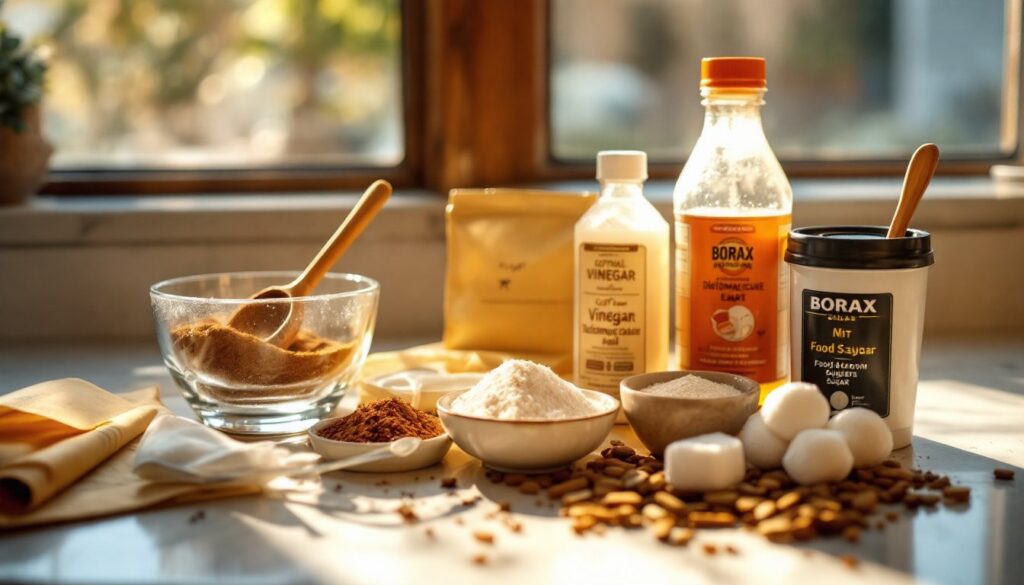
ToggleAnts marching through the kitchen aren’t just annoying, they’re a sign that an opening exists somewhere and they’ve found a food source. The standard response used to be reaching for a can of chemical spray, but homeowners increasingly prefer solutions that don’t fill the house with fumes or leave residue on surfaces where family members eat and play. Natural ant killers work differently than commercial pesticides: they target the colony at its source rather than just the scouts you see. The best part? Most ingredients are already in the pantry. This guide walks through seven home remedies that actually deliver results, why they work, and how to deploy them strategically around the house.
Key Takeaways
- Home remedy ant killers target the colony at its source by using worker ants to carry poison back to the nest, making them more effective than sprays that only kill visible scouts.
- Diatomaceous earth is one of the most effective ant barriers, creating microscopic cuts on ant exoskeletons upon contact and requiring only a five-pound bag for roughly 200 linear feet of coverage.
- Borax baits mixed with powdered sugar (1:1 ratio with borax) can eliminate an entire colony within 7–10 days when ants carry the solution back to the queen.
- Combining multiple methods—cinnamon and vinegar for deterrence, baking soda and borax baits for colony elimination, and diatomaceous earth for perimeter defense—delivers the most reliable results.
- Prevention is critical after eliminating an ant infestation: eliminate food sources, fix water leaks, seal entry points with caulk, and maintain a clean foundation perimeter to keep ants from returning.
- Most home remedy ant killer ingredients cost just a few dollars and are already in your pantry or affordable to purchase, making them a fraction of the $150–$300 cost of professional pest control services.
Why Home Remedies Beat Commercial Ant Killers
Commercial ant killers work fast on visible insects, but they often miss the queen and satellite colonies nested inside walls or under the foundation. Chemical sprays also break down quickly and require repeated applications. Home remedies take a different route: they’re designed to be carried back to the nest by worker ants, poisoning the entire colony from within.
Another advantage is safety. Young children and pets don’t have to avoid treated baseboards or floors, and the smell won’t linger for days. Many commercial products contain synthetic pyrethroids or neonicotinoids, which are effective but unnecessary if a colony can be eliminated through bait stations using ingredients from the kitchen. Home remedies also cost a fraction of what professionals charge, often just a few dollars instead of $150–$300 for a service call.
That said, be realistic about timelines. Colony elimination takes 1–2 weeks minimum, compared to the immediate knockdown of a spray. If ants are swarming and you need them gone today, a commercial product might be the practical choice. But for prevention and long-term control, home remedies are reliable and worth the wait.
Cinnamon and Coffee: The One-Two Punch Against Ants
Cinnamon’s scent is repellent to ants, they avoid it like humans avoid a blocked drain. The trick is using it as a barrier rather than expecting it to kill the colony. Sprinkle ground cinnamon directly along entry points, door thresholds, and baseboards where ants trail. Refresh it weekly or after rain if applied outdoors. Cinnamon works best as a deterrent to keep scouts from establishing new trails.
Coffee grounds offer complementary action. Used grounds (from brewed coffee) contain caffeine and nitrogen, both mildly toxic to ant colonies in concentrated amounts. Scatter dried grounds around the foundation’s perimeter, in potted plants, or along fence lines where ants enter the yard. The grounds also add nitrogen to soil if you’re not worried about the aesthetic.
Combine both for a layered approach: cinnamon at immediate entry points and coffee grounds around the outer perimeter. Neither will eliminate an established colony alone, but together they reduce recruitment of new foragers and slow the infestation while other remedies do the heavy lifting. Store ground cinnamon in an airtight container to preserve potency.
Vinegar and Baking Soda Solutions
Vinegar disrupts the pheromone trails ants use to navigate. When you spray a 1:1 solution of white vinegar and water along baseboards, doorways, and windows, it obliterates the chemical breadcrumbs that guide the colony. The ants become disoriented and foraging efficiency drops sharply. This method is fast-acting but temporary, the vinegar scent fades within hours, so reapply daily for best results.
Baking soda is a different lever entirely. When ingested by ants, sodium bicarbonate reacts with stomach acid and causes internal disruption. The challenge is getting them to consume it, they won’t eat it voluntarily. This is where the bait approach matters: mix baking soda with powdered sugar (1:1) and a tiny splash of water to form a paste. Spread it on cardboard strips or shallow bottle caps and place near ant trails. The sugar attracts workers: they’ll carry baking soda back to the nest.
Use vinegar as your cleaning and trail-breaking tool daily, and baking soda baits as your slow-acting colony killer set overnight. Don’t mix them directly, the acid-base reaction neutralizes both. Deploy them sequentially: spray vinegar to disrupt trails during the day, then set baking soda baits at night near nests.
Diatomaceous Earth: Nature’s Most Effective Ant Barrier
Food-grade diatomaceous earth (DE) is one of the most underrated ant killers available. It’s a fine powder made from fossilized diatoms, tiny organisms with sharp, jagged shells. When ants cross a line of DE, the powder adheres to their exoskeleton and causes microscopic cuts, leading to dehydration and death. Unlike organic baits that take days to work, DE kills on contact while still targeting colonies if ants carry it back on their bodies.
Application is straightforward but requires thoroughness. Wear a dust mask and goggles when applying, you don’t want to inhale fine particles. Create a barrier (about 1/4-inch thick) along baseboards, around window frames, and at door thresholds. Outdoors, apply it around the foundation perimeter, especially near entry points. Reapply after rain or watering, since moisture reduces its effectiveness.
DE is safe for humans and pets at food-grade concentrations, but it’s still a powder that irritates lungs if breathed heavily. Keep it away from food prep areas and wash hands after application. A five-pound bag costs under $15 and covers roughly 200 linear feet, making it economical for whole-house treatment. The downside is that it won’t work inside walls or deep nests, it’s a perimeter defense, not a colony eliminator. Combine it with baits for complete control.
Borax Baits and Essential Oil Combinations
Borax is the heavy hitter in home ant control. It’s a naturally occurring mineral salt that disrupts ant metabolism and kills the colony when ants consume it and bring it back to the nest. The challenge is getting ants to eat it, borax tastes bitter, so it must be masked with something they’ll actively forage.
The classic bait formula is: 1 cup powdered sugar, 1/2 teaspoon borax, 1/2 cup water. Mix until the borax dissolves completely, then soak cotton balls in the solution. Place them in shallow containers (like a pill bottle cap) near ant trails, but out of reach of children and pets. Ants will feed on the liquid and carry it back to the queen. Colony collapse typically occurs within 7–10 days.
Essential oils amplify this effect. Peppermint, tea tree, and clove oils repel ants and can be mixed (2–3 drops per bait) to discourage non-target insects while the borax does the work. But, essential oils also make the bait less palatable, so use them sparingly if you’re trying to maximize consumption. According to pest management research, borax-based baits remain among the most reliable DIY colony eliminators available.
Safety note: Borax is toxic if ingested in quantity. Label all baits clearly, keep them in closed containers, and place them behind appliances or in areas inaccessible to children under six and pets.
Prevention Strategies to Keep Ants Out for Good
Once you’ve eliminated the current colony, prevention is about removing the conditions that attracted ants in the first place. Ants enter homes for two reasons: water and food. Eliminate both, and they won’t settle.
Food storage is the priority. Keep dry goods (flour, sugar, cereals) in airtight containers, not open boxes. Wipe down counters and stovetops immediately after meals, dried crumbs that seem invisible to humans are highway signs to ants. Take trash out daily, especially if it contains food waste, and keep lids sealed. Pet food left in bowls overnight is an open invitation: pick up bowls after feeding.
Moisture control matters equally. Fix leaking pipes under sinks and around water heaters, ants often nest near water sources. Ensure proper drainage around the foundation: standing water after rain creates colonies’ preferred habitat. Trim vegetation touching the house, as plants are ant highways into the structure.
Seal entry points with caulk, weatherstripping, or spray foam. Small gaps around electrical outlets, baseboards, and window frames are ant highways. Check that door sweeps fit snugly. Outdoors, move mulch and landscape bark away from the foundation, ants love nesting in these materials right against the house.
Maintain a clean perimeter. Don’t stack firewood against the house, and keep grass mowed short near the foundation. These small adjustments, combined with occasional applications of the remedies above (cinnamon lines, DE barriers), create an environment where ants find it not worth the effort to establish a colony.
Conclusion
Home remedies for ants don’t require a degree in chemistry or a contractor’s budget. Cinnamon, vinegar, baking soda, diatomaceous earth, and borax baits are proven, affordable, and safe when applied correctly. The key is patience, colony elimination takes 1–2 weeks, and layering methods. One remedy alone rarely solves a serious infestation: combining repellents (cinnamon, vinegar) with colony killers (borax baits, baking soda) and barriers (diatomaceous earth) delivers reliable results. Once the colony is gone, focus on prevention: seal entry points, eliminate food and water sources, and maintain a clean perimeter. For severe infestations or if ants return repeatedly even though these efforts, consulting a licensed pest control professional is the practical call.