Table of Contents
ToggleWindow replacement is one of those home improvement projects that pays dividends long after installation. In Southlake, where heat and humidity demand efficient climate control, upgrading from outdated single-pane windows to modern energy-efficient models can cut cooling costs by 15–20% annually. Whether you’re dealing with original 1990s vinyl frames that no longer seal properly or just want to boost your home’s curb appeal and resale value, understanding your options, costs, and the installation process helps you make informed decisions. This guide walks you through everything a Southlake homeowner needs to know about home window replacement.
Key Takeaways
- Home window replacement in Southlake can reduce cooling costs by 15–20% annually by upgrading to modern energy-efficient models with Low-E glass and insulated frames.
- Double-hung and single-hung windows serve different needs; double-hung offers flexibility for living areas while single-hung is simpler and more affordable for bedrooms or offices.
- Typical window replacement costs range from $400–900 per window installed, with most Southlake homes replacing 10–15 windows for a total investment of $6,000–15,000.
- Verify contractor licensing through the Texas Department of Licensing and Regulation, request proof of insurance, and obtain detailed written estimates from at least two contractors before deciding.
- Professional installation takes 1–3 days and includes proper sealing with foam backer rod and caulk to prevent air and water infiltration, ensuring long-term durability and performance.
- Energy-efficient upgrades like Low-E coatings and argon gas fill typically recoup their costs through utility savings and insurance discounts within 7–10 years.
Why Replace Your Windows: Key Benefits for Southlake Homeowners
Southlake’s climate, hot summers, occasional ice storms, and high humidity, puts windows through the wringer. Old, worn windows lose their seal, allowing conditioned air to escape and outdoor elements to infiltrate. Replacing them improves comfort, lowers utility bills, and addresses real maintenance problems.
Energy efficiency is the biggest payoff. Modern windows with low-emissivity (Low-E) glass and insulated frames reflect heat while letting light in, keeping your home cooler in summer and warmer in winter. A typical Southlake home replacing 10–15 windows can see $150–300 in monthly energy savings during peak cooling season.
Secondary benefits matter too. Replacement windows reduce outside noise, improve security, and require less maintenance than aging frames prone to rot, sticking, or paint failure. Many newer models come with warranties of 10–20 years, giving peace of mind that older units simply don’t offer.
Types of Windows Available for Southlake Homes
Window choice depends on your aesthetic, budget, climate needs, and whether your home faces the intense afternoon sun or sits more protected. Understanding the main categories helps narrow the field.
Single-Hung vs. Double-Hung Options
Single-hung windows have one movable sash (the frame that slides up and down) and one fixed pane. They’re simpler, less expensive, and require less maintenance, only one moving part to clean and lubricate. They work well for rooms where you don’t need full flexibility, such as bedrooms or offices.
Double-hung windows have two movable sashes, letting you open the top and bottom independently. This added flexibility makes them popular for living areas and kitchens, especially in homes where cross-ventilation matters. The trade-off: more moving parts mean slightly higher maintenance and cost. Most Southlake homes feature double-hung windows as a default, so matching that style keeps exterior consistency.
Energy-Efficient and Impact-Resistant Choices
For Southlake specifically, energy-efficient windows with Low-E coatings and insulated frames (typically vinyl or fiberglass) outperform traditional aluminum frames. Aluminum conducts heat rapidly, making it poor for this climate unless thermally broken (a plastic insert isolates the inner and outer frames). Vinyl and fiberglass offer superior insulation and don’t require painting.
Impact-resistant windows have laminated glass (similar to car windshields) that resists breaking under stress. While Southlake doesn’t sit in a traditional hurricane zone, impact-resistant glass provides security benefits and can lower homeowner’s insurance premiums. Expect to pay 20–30% more for this upgrade.
Look for the National Fenestration Rating Council (NFRC) label on any window you consider. It shows U-factor (insulation value), Solar Heat Gain Coefficient (SHGC), and air leakage ratings, critical for matching Southlake’s cooling demands.
Finding the Right Window Replacement Contractor
This step determines whether your project runs smooth or becomes a frustration. Southlake homeowners have access to skilled contractors, but vetting matters.
Start by checking reviews on platforms like Angi, which aggregates ratings, completed jobs, and verified reviews from real customers. Ask contractors for at least three local references, preferably recent window jobs in Southlake or nearby areas with similar home styles. Call those homeowners and ask about timeliness, cleanup, warranty clarity, and whether they’d hire the contractor again.
Confirm licensing and insurance. In Texas, general contractors performing window work should hold a current license (verify with the Texas Department of Licensing and Regulation). Request proof of liability and workers’ compensation insurance: if someone gets hurt on your property, you’re liable if the contractor lacks coverage.
Get detailed written estimates from at least two contractors. A good estimate breaks down labor, materials, timeline, warranty terms, and any permitting fees. Avoid contractors who pressure you or quote significantly lower than others, a suspiciously cheap bid often means corners will be cut.
Ask about the removal and disposal of old windows. Proper disposal costs money, and a contractor who won’t mention it might not handle it properly. Also ask about prep work and whether they’ll paint trim or caulk exterior seams as part of the job, since these details affect the final result.
Window Replacement Costs and Budgeting
Southlake window replacement costs typically range from $400–900 per window installed, depending on size, style, frame material, and energy rating. A typical home replacing 10–15 windows runs $6,000–15,000. These are ballpark figures: your actual cost depends on local labor rates, material choices, and site complexity.
Vinyl windows start lower (often $300–600 installed) and suit most budgets. Fiberglass frames cost 15–25% more but last longer and don’t require painting. Wood windows deliver classic aesthetics but demand regular maintenance and cost $800+ per unit installed.
Energy-efficient upgrades (Low-E glass, argon gas fill, thermal breaks) add $50–150 per window. Impact-resistant glass adds $100–300 per window. While these sound steep, they often recoup savings in utility costs and insurance discounts within 7–10 years.
Use online cost estimators like HomeAdvisor‘s project cost calculator to ballpark your investment, but get in-person quotes for accuracy. Regional pricing, your home’s window condition, and whether exterior trim needs replacement all shift the final number. Some contractors offer financing options (0% APR for 12–24 months), which makes larger projects more manageable.
The Installation Process and What to Expect
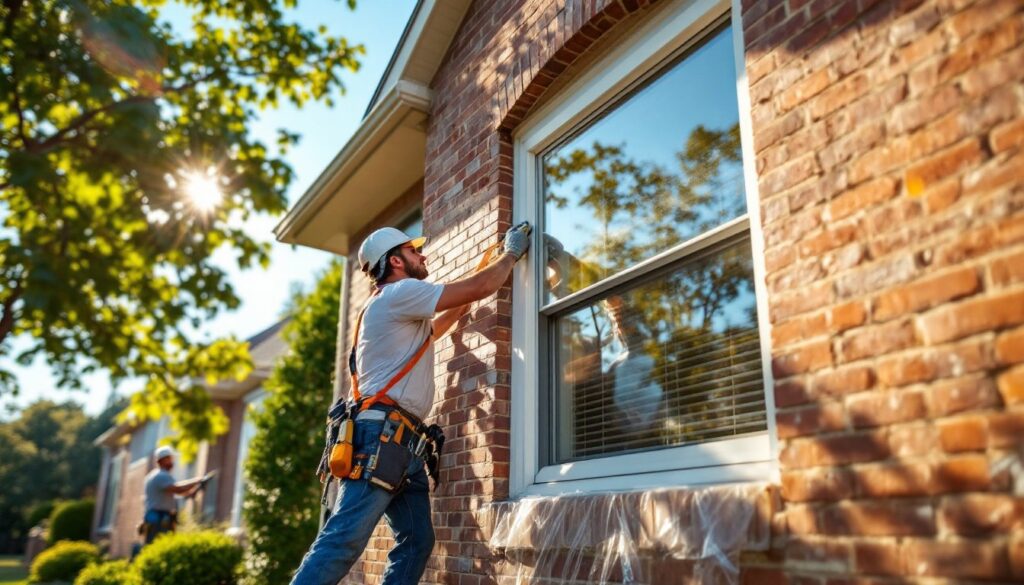
A professional window replacement typically takes 1–3 days for a whole-house project, depending on window count and complexity. Understanding the process prevents surprises.
Contractors start by protecting your floors and furniture with plastic sheeting and drop cloths. They’ll remove the interior trim (stops and casings), then carefully pry out the old window frame, modern windows often come with nails driven through flanges or frames set in caulk that requires patient work to break free without damaging the rough opening (the structural frame opening in your wall).
Once the old window is out, the contractor inspects the rough opening for rot, water damage, or structural issues. Any rot requires remediation before the new window installs. The rough opening must be square and level, verified with a spirit level and square. If it isn’t, the contractor will shim (use tapered wedges) to level it.
The new window installs with the frame positioned inside the rough opening, fastened with corrosion-resistant fasteners (typically stainless steel or galvanized nails), and shimmed level and plumb. The installer then seals the gap between the frame and rough opening with foam backer rod and caulk, which prevents air and water infiltration. Finally, interior trim is replaced and painted or stained to match.
Proper installation prevents leaks, drafts, and premature failure. Rushing this step, or worse, using caulk alone without backer rod, leads to eventual water damage. If a contractor won’t explain their sealing method or seems to cut corners, walk away. Most reputable contractors provide a labor warranty (typically 1–2 years) plus to the window manufacturer’s 10–20-year warranty.