Table of Contents
ToggleTiny home trailers are reshaping how Americans think about housing. Whether you’re looking to escape mortgage debt, downsize your lifestyle, or gain the freedom to relocate, a tiny home trailer offers practical solutions at a fraction of traditional home costs. These compact, mobile dwellings range from simple travel trailers converted into living spaces to purpose-built custom units designed for full-time residence. The tiny home movement has evolved beyond a trend, it’s become a genuine alternative for homeowners and renters alike who value flexibility, sustainability, and financial independence. This guide walks you through what tiny home trailers are, their real advantages, the types available, and how to decide whether buying or building makes sense for your situation.
Key Takeaways
- Tiny home trailers cost $40,000–$150,000 compared to $400,000–$500,000 for traditional homes, delivering dramatic savings on purchase price, property taxes, utilities, and maintenance over decades.
- Monthly utility bills drop 80% or more in tiny homes due to reduced square footage, making them ideal for budget-conscious buyers and those seeking financial independence.
- Tiny home trailers offer unmatched mobility and flexibility—you can relocate without selling land or navigating real estate transactions, perfect for remote workers and seasonal professionals.
- Purpose-built tiny homes engineered as primary residences ($60,000–$150,000) provide better durability and legal recognition than travel trailer conversions, making them suitable for long-term residence.
- Smart layout design with multi-functional furniture, adequate storage, quality insulation (R-15 walls, R-30 roof), and full kitchen/bath facilities separate livable tiny homes from cramped spaces.
- Before buying, research local zoning laws, land availability, and utility options—not every jurisdiction permits tiny homes, and legality determines whether your investment is viable long-term.
What Are Tiny Home Trailers and Why They’re Gaining Popularity
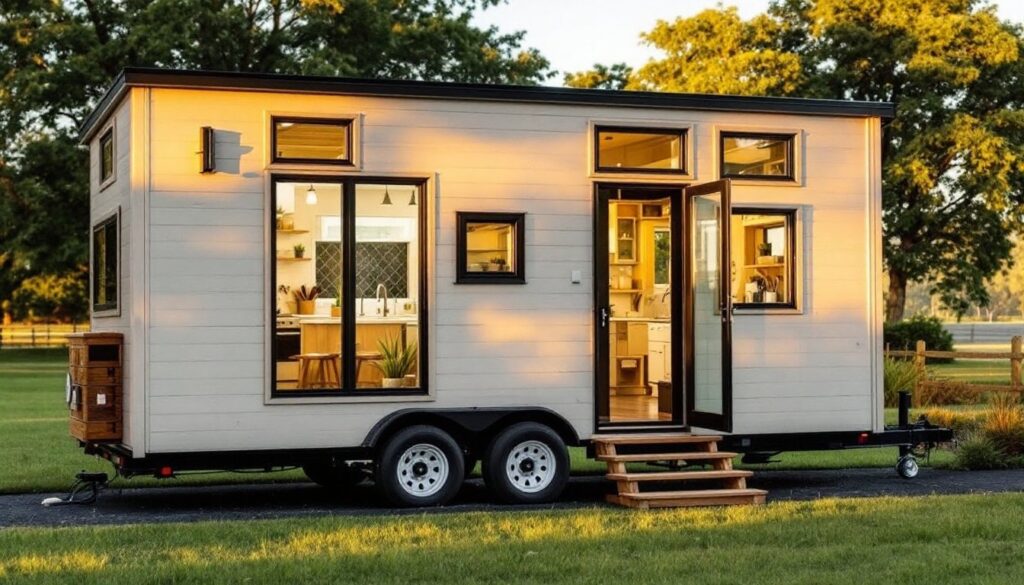
A tiny home trailer is a mobile dwelling built on a permanent or semi-permanent chassis, typically ranging from 200 to 400 square feet, though some exceed this. Unlike standard travel trailers designed for camping, tiny home trailers are engineered as primary residences, they include full kitchen and bath facilities, insulation for year-round living, and utility hookups for water, sewer, and electrical power.
Their popularity stems from real, measurable reasons. Traditional home prices continue to climb, with the median home price in the U.S. exceeding $400,000 in many markets. Tiny home trailers offer a tangible alternative: complete, livable units at $40,000 to $150,000 depending on features and customization. They also appeal to those seeking lifestyle change, remote workers no longer tied to one location, retirees simplifying their lives, or young professionals building wealth without crippling debt.
Building codes and zoning regulations are slowly adapting too. More municipalities now permit tiny home communities and allow tiny homes on single-family lots, legitimizing what was once considered unconventional housing. The COVID-19 pandemic accelerated this shift as remote work made location flexibility suddenly valuable.
Key Advantages of Choosing a Tiny Home Trailer
Affordability and Cost Savings
The price difference between a tiny home trailer and a conventional house is staggering. A typical new construction single-family home costs $400,000–$500,000: many tiny home trailers deliver complete living quarters for $50,000–$100,000. This matters beyond purchase price: property taxes, insurance, utilities, and maintenance all scale down proportionally.
Monthly utility bills shrink dramatically. Heating and cooling 300 square feet versus 2,000 cuts energy consumption by 80% or more. Water usage drops, septic or sewer fees decrease, and property taxes based on assessed value are significantly lower. Over a 20-year lifespan, these savings compound to hundreds of thousands of dollars, real money that can fund retirement, education, or entrepreneurial pursuits.
Mobility and Flexibility
Tiny home trailers aren’t legally bound to a single lot. You can relocate to follow work, escape harsh winters, or simply try a new region without the commitment of purchasing land or navigating lengthy real estate transactions. This flexibility appeals to remote workers, seasonal professionals, and anyone exploring their options before settling permanently.
Moving does require logistics, hiring a licensed hauler, ensuring roads and utilities accommodate the trailer, but it’s far simpler than selling a traditional home. Some owners use this adaptability strategically: work in high-income cities during peak seasons, then relocate to lower cost-of-living areas during slower months, effectively stretching limited budgets.
Types of Tiny Home Trailers to Consider
Tiny home trailers fall into several distinct categories, each with trade-offs in cost, durability, and lifestyle fit.
Travel Trailer Conversions are the entry-level option. Standard travel trailers, built by RV manufacturers like Forest River or Jayco, are retrofitted for full-time living with upgraded appliances, better insulation, and permanent utility connections. These run $25,000–$60,000 and suit budget-conscious buyers, but they’re not engineered as primary residences, so plumbing and electrical systems are lighter-duty.
Purpose-Built Tiny Homes are constructed specifically for residential living. Manufacturers like Tumbleweed, Mint Tiny Homes, and New Frontier Tiny Homes design units with residential-grade framing, insulation values matching building codes, and integrated utility systems. Expect to spend $60,000–$150,000, but you’re buying durability and resale value. These trailers can legally serve as primary residences in most jurisdictions.
Custom-Built Tiny Homes are owner-designed or contractor-built units tailored to specific needs. Costs vary wildly, $80,000 to $200,000+, depending on finishes, appliances, and complexity. This route works best if you have a clear vision, time to oversee construction, and access to a skilled builder experienced in trailer-based tiny homes.
Expandable Trailers feature slide-outs or fold-out sections that increase living space when parked. They’re more expensive ($80,000–$160,000) but eliminate the cramped feeling some find claustrophobic in tiny living. Consider whether you’ll regularly expand or if a smaller fixed footprint better matches your lifestyle.
Essential Features and Layout Design Considerations
Smart layout design separates a livable tiny home from a cramped mobile unit. Every square foot must work harder.
Kitchen and Bath consume disproportionate space in tiny homes. Prioritize a full-size refrigerator, a real stove (not just burners), and adequate counter space, even if other areas shrink. Bathrooms need a full shower, not just a wet bath with no distinction between toilet and shower area. Ventilation fans that actually duct to outside (not recirculating) prevent moisture problems in such tight quarters.
Multi-functional Living Areas save precious square footage. A dining table that folds or tucks away, a bed with storage underneath, and living room seating that converts to guest sleeping are standard features. Apartment Therapy offers countless examples of how small spaces work when furniture earns its keep.
Storage and Organization matter more in 300 square feet than in 3,000. Look for units with overhead cabinets, under-stair storage, and built-in shelving. Poor storage turns a tiny home into a cluttered box: smart storage makes it feel open and functional.
Climate Control and Insulation directly impact livability. Tiny homes lose and gain heat quickly due to surface-area-to-volume ratios, so quality insulation (at least R-15 in walls, R-30 in roof) is essential. Good windows, sealed seams, and an efficient HVAC system prevent temperature swings and condensation problems. Check specs before buying: inadequate insulation makes tiny homes uncomfortable in extreme climates.
Utility Hookups and Off-Grid Capability vary by trailer. Standard units connect to municipal water and sewer: others use tanks and must be dumped regularly like RVs. Some owners add solar panels, composting toilets, and greywater systems for off-grid capability, more upfront cost, but greater long-term flexibility and resilience.
Buying vs. Building Your Tiny Home Trailer
Deciding whether to buy a completed tiny home trailer or build your own depends on budget, timeline, and skill level.
Buying a completed unit is fastest and lowest-risk. You inspect the trailer, verify it meets your needs, and arrange financing and delivery. Expect 2–4 months from purchase to move-in. Manufacturers and reputable dealers provide warranties, and you’re not personally liable for construction defects. The trade-off: you pay a markup for labor and overhead, and customization options are limited to what the builder offers. Prices are transparent, though, making budgeting straightforward.
Building your own saves money if you have construction skills or access to affordable labor. DIY tiny home builders report saving 20–40% versus purchasing a comparable finished unit. But, construction takes 6–18 months depending on complexity and your availability. You’ll need permits, inspections, and liability insurance if others are involved. Mistakes are expensive, rework, scrap materials, and learning curves add up quickly. Building also requires significant time investment and problem-solving: it’s not a side project.
Semi-custom options split the difference. Some builders offer shell-and-finish packages: they construct the trailer and envelope, you handle interior work like flooring, paint, and fixtures. This suits handy owners with moderate building experience and stretches the budget while reducing overall project timeline. Real Simple has published guides on home organization and design decisions that help prioritize which customizations matter most for your daily life.
Before committing, research zoning laws in your target area. Some municipalities restrict tiny homes to specific communities or require minimum square footage: others permit them on any residential lot. Land ownership, lot size, and utility availability also influence the decision, a finished tiny home is useless without a legal place to park it.
Is a Tiny Home Trailer Right for You?
Tiny home trailers solve real problems for real people: they slash housing costs, enable mobility, and align with minimalist or sustainable values. They’re not universally right, some folks need more space, and not every jurisdiction permits them. But for remote workers, retirees, young professionals building wealth, and anyone reassessing their lifestyle, tiny homes offer genuine freedom. Research local zoning first, visit completed units in person, and talk honestly about whether compact living suits your habits and family size. The tiny home movement isn’t a trend fading in 2026, it’s a practical solution reshaping the housing landscape for those willing to rethink what “home” means.