Table of Contents
ToggleTampa’s warm climate, booming real estate market, and growing population have sparked a remodeling boom among homeowners. Whether you’re updating a 1950s bungalow in Hyde Park or a modern condo in downtown, home remodeling in Tampa is becoming a smart investment strategy. The region’s humidity and salt air present unique material challenges, and the local permitting process has its own quirks. This guide walks you through the entire remodeling journey, from initial planning to final inspections, so you can tackle your project with confidence and avoid costly missteps.
Key Takeaways
- Home remodeling in Tampa is a smart investment due to rising home values and the region’s unique climate challenges—humidity, salt air, and hurricane exposure demand durable materials and strategic upgrades.
- Allocate 10–15% of your home’s value to a significant remodel and include a 15–20% contingency buffer for unexpected structural issues, supply delays, and permit backlogs common in Tampa.
- Kitchen and bathroom remodels deliver the strongest ROI in Tampa; prioritize moisture-resistant materials like porcelain tile, quartz countertops, and proper ventilation to combat humidity and mold growth.
- Define your scope clearly, visit local material showrooms to see how Tampa’s bright sunlight affects finishes, and get at least three written estimates from licensed, insured contractors before hiring.
- Most structural, electrical, plumbing, HVAC, and roof projects in Tampa require building permits that can take 2–4 weeks to issue; coordinate inspector walkthroughs and ensure compliance with Florida’s International Building Code amendments for wind and flood zones.
- Hurricane-resistant features like impact-resistant windows and reinforced roofing may be code-required in Tampa, so verify local regulations and work with a contractor familiar with these zone-specific rules.
Why Tampa Homeowners Are Investing In Remodeling Projects Right Now
Florida’s housing market has seen explosive growth over the past five years, and Tampa sits at the center of that expansion. Home values are rising faster than the statewide average, which means homeowners are capitalizing on strong equity to fund renovations. Unlike cosmetic updates, strategic remodeling, kitchen overhauls, bathroom upgrades, and master suite additions, significantly boost resale value.
The climate also plays a role. Tampa’s intense sun, humidity, and occasional hurricanes put extra wear on roofing, exterior cladding, and HVAC systems. Many owners pair these necessary repairs with aesthetic upgrades. A roof replacement becomes an opportunity to improve ventilation: a new exterior facade invites a fresh color palette and hurricane-resistant impact windows.
Another factor: lifestyle preferences have shifted post-pandemic. Remote workers want dedicated home offices, expanding families need extra bedrooms, and retirees are downsizing within Tampa rather than leaving Florida. Each scenario calls for different remodeling solutions.
Getting Started: Essential Steps Before Hiring A Contractor
Before you post a job listing or call three contractors, take a hard look at your goals and constraints.
Define Your Scope Clearly. Write down exactly what you want to change. Are you refreshing the kitchen cabinet fronts and countertops, or are you moving the sink and range and upgrading plumbing? Are you retiling a shower, or gutting it down to the studs to fix leaks behind the wall? Vague requests lead to vague estimates and scope creep during the project.
Get Inspired Safely. Browse home remodeling ideas on Houzz, save photos, and note what appeals to you, colors, materials, layouts. But remember: an inspiration photo from a magazine shoot with professional lighting and staging may not translate directly to your space or budget.
Measure Twice, Measure Again. Grab a tape measure and sketch your space, or use a smartphone app like MagicPlan. Note the room’s footprint, ceiling height, electrical outlets, plumbing locations, and any permanent fixtures. This data is gold when talking to contractors and helps you spot potential complications early.
Visit Material Showrooms. Granite, ceramic, vinyl plank, paint finishes, these choices look different in photos than in person. Tampa’s bright sunlight and humidity can shift how colors and finishes appear. Spend an afternoon at a few local supply stores or home centers to get a tactile sense of materials you’re considering.
Budgeting For Your Tampa Remodel
Most Tampa homeowners allocate 10–15% of their home’s value to a significant remodel. A $400,000 home, then, might justify a $40,000–$60,000 project. That’s a rough baseline: a full kitchen gut-and-rebuild or bathroom renovation can easily exceed $50,000 depending on scope and material quality.
Hide a contingency buffer of 15–20% in your budget. Supply delays, unforeseen structural damage, and permit backlogs are common in Tampa. When a contractor removes drywall and discovers termite damage or outdated knob-and-tube wiring, you’ll need cash reserves to handle it without stalling the project.
Get multiple quotes, at least three, from licensed, insured contractors. Use platforms like Angi to find vetted professionals in the Tampa Bay area or ask trusted neighbors for referrals. A written estimate should itemize labor, materials, timeline, and change-order procedures. Be suspicious of unusually low bids: they often signal cut corners or contractor cash-flow desperation.
Popular Remodeling Projects For Tampa Homes
Not all remodels are equal. Some projects deliver strong ROI and improve daily living: others are more indulgent. Understanding the difference helps you make smart choices.
Kitchen Remodels: Adding Value & Functionality
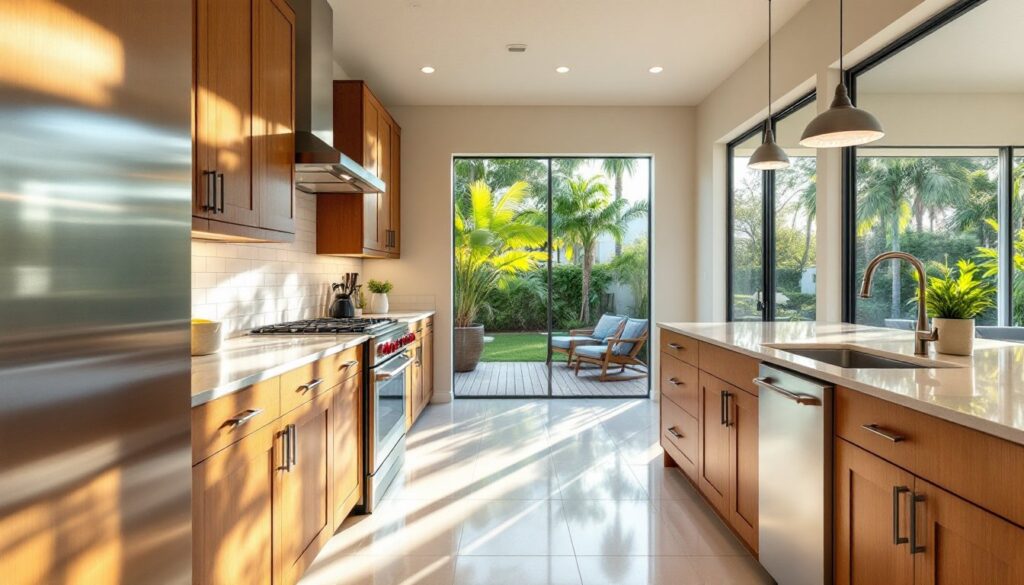
Kitchens are the heart of the home and the second most expensive room to remodel after the master bathroom. In Tampa, a mid-range kitchen renovation runs $60,000–$100,000: high-end kitchens push beyond $150,000.
Where to prioritize your investment: Cabinetry, countertops, and appliances represent 50–60% of a kitchen budget and have the most visible impact. Soft-close drawers, pull-out shelves, and deeper uppers maximize storage in Florida homes where humid air demands sealed cabinets to prevent swelling. Quartz or granite countertops resist staining better than laminate and hold up to the constant cleaning that humid climates demand.
Lighting and ventilation are often overlooked but critical in Florida. Under-cabinet LED strips illuminate work surfaces and reduce eye strain. A robust range hood or downdraft vent removes heat and moisture: skimping here leads to mold and odors in humid months.
Flooring in kitchens should be water-resistant. Porcelain tile, polished concrete, and luxury vinyl plank all perform well in Tampa’s climate. Avoid solid hardwood in kitchens unless you’re committed to frequent maintenance.
Layout changes (moving plumbing, relocating the sink, or repositioning the range) multiply costs fast. Plan your layout carefully before hiring a contractor. Use renovation planning tools like ImproveNet to explore options and estimate costs.
Bathroom Upgrades: The ROI Leader In Home Renovation
Bathroom upgrades consistently rank as the best ROI renovation. A mid-range bathroom remodel returns 50–65% of its cost at resale, and homeowners enjoy the upgrade immediately.
Moisture control is non-negotiable in Tampa. Exhaust fans must vent directly outside (not into the attic), and ventilation should run 20 minutes after each shower to prevent mold. Install cement board, not drywall, behind tile in shower areas. Drywall absorbs humidity and fails: cement board resists moisture indefinitely.
Fixtures and finishes matter. A new toilet, vanity, faucet, and lighting can transform a dated bathroom for $5,000–$15,000. Tile work and plumbing upgrades push costs higher. Porcelain or natural stone tile holds up better than ceramic in wet environments: seal grout lines with epoxy-based products that resist humidity and mildew.
Flooring should be slip-resistant and water-impervious. Textured porcelain tile, natural stone, and luxury vinyl are safer and more durable than polished marble or smooth ceramic, especially for aging-in-place bathrooms.
A full bathroom gut-and-remodel (moving plumbing, replacing the tub with a walk-in shower, updating all fixtures) runs $20,000–$50,000 in the Tampa area. Cosmetic updates, new vanity, hardware, lighting, paint, and a caulk-and-seal refresh, cost $3,000–$8,000 and still feel like a major upgrade.
Navigating Permits & Regulations In Tampa
Tampa and Hillsborough County enforce building codes aggressively, especially for structural work, plumbing, electrical, and HVAC changes. Pulling permits isn’t optional: it protects your investment and ensures work meets code.
Which Projects Require Permits? Any structural changes (removing walls, adding load-bearing headers, floor joists), electrical work beyond replacing outlets, plumbing modifications, HVAC replacement, and roof work all require permits. Kitchen and bathroom remodels that involve plumbing or electrical almost always need permits. Cosmetic work, painting, cabinet refacing, light fixture swaps on existing circuits, typically doesn’t, but when in doubt, ask your local building department.
The Timeline. Permits in Tampa can take 2–4 weeks to issue, depending on the season and plan review queue. Summer (June–September) is slower. Budget extra time, and don’t pressure your contractor to start before the permit is approved: that exposes you to liability and fines.
Inspector Walkthroughs. Once work begins, inspectors visit at key stages: foundation/framing, rough-in (plumbing and electrical before drywall), and final completion. Have your contractor coordinate these: missing an inspection can halt the project. Florida’s building code aligns with the International Building Code (IBC), with state-specific amendments for wind, coastal loads, and flood zones. If your home is in a flood zone (common in Tampa), elevation requirements or flood vents may apply.
Hurricane Considerations. Impact-resistant windows, reinforced roofing, and tie-downs for HVAC units aren’t just nice-to-haves in Tampa, they’re often code-required depending on your zone and the year of construction. Your contractor should know these rules: if they don’t, hire an engineer to review your plans before you break ground.