Table of Contents
ToggleA home theater sectional is more than just a place to sit, it’s the centerpiece of your entertainment space. Unlike regular seating, these pieces are engineered for comfort during long movie marathons, designed with specific features like recliners, cup holders, and strategic dimensions to maximize viewing angles. Whether you’re outfitting a dedicated media room or upgrading your living room for better screen time, choosing the right sectional shapes how you’ll enjoy everything from blockbusters to sports. This guide walks you through what separates quality theater seating from standard sofas, the features that matter most, and practical advice for selecting and placing a sectional that fits your space and budget.
Key Takeaways
- A home theater sectional differs from regular seating through deeper seats (36-40 inches), firmer cushioning, reclining mechanisms, and built-in features like cup holders and USB ports designed for extended viewing comfort.
- Prioritize frame quality (hardwood or kiln-dried engineered wood), cushion density (1.8-2.2 lbs per cubic foot), and recline type (powered vs. manual) over flashy gadgets when evaluating a home theater sectional.
- Position your sectional 1.5 to 2.5 times the diagonal measurement of your screen away from the TV, angle it slightly toward the display, and maintain at least 18 inches of floor clearance for full recliner functionality.
- Budget $1,200–2,500 for entry-level models, $2,500–4,500 for mid-range sectionals with solid construction, and $4,500–8,000+ for premium pieces with fully powered recline and premium materials.
- Always conduct an in-store sit test for at least 15 minutes, verify delivery and assembly terms, and check the warranty (prioritize 10-year structural coverage) before making your final purchase decision.
What Makes a Home Theater Sectional Different From Regular Seating
A home theater sectional is built with viewing comfort as the primary goal, which sets it apart from standard living room sofas. Regular sectionals prioritize aesthetics and general lounging: theater-specific pieces prioritize sight lines, recline functionality, and ergonomic support for extended sitting sessions.
The key difference lies in the seat depth and cushion firmness. A theater sectional typically has a deeper seat (often 36-40 inches) compared to a standard sectional’s 30-35 inches, allowing viewers to recline and stretch without sliding forward. The cushioning is also firmer, usually a high-density foam core with a softer top layer, so it supports your back during a 2-3 hour film without going flat by intermission.
Reclining mechanisms distinguish theater models from basic seating. Most include powered or manual recline functions, allowing each section to adjust independently. Some even feature “zero gravity” recline positions that elevate legs to heart level, reducing strain during long viewing sessions.
Built-in features common to theater sectionals include cup holders, storage compartments for remotes or blankets, and integrated ambient lighting or USB charging ports in the armrests. These aren’t luxury add-ons: they’re practical solutions to keep distractions minimal while you’re settled in.
Key Features to Look For in a Home Theater Sectional
When evaluating a home theater sectional, focus on five core features that directly affect comfort and usability.
Recline Type and Control: Manual recline is simpler and requires no power, making it reliable in older homes without dedicated circuits. Powered recline adds convenience, especially if you have multiple seats, and often includes memory settings so each family member can save their preferred position. Hybrid models offer both, with one or two powered seats and manual backup.
Fabric or Leather: Leather (genuine or high-quality bonded) cleans easily and won’t absorb spills or odors, making it ideal for eating snacks in the media room. Microsuede and performance fabrics offer a softer feel and come in more color options, but require more careful cleaning. Check the durability rating (Martindale test: aim for 50,000+ cycles for heavy use).
Support and Cushioning: The frame should be hardwood or kiln-dried engineered wood, not particleboard. Cushion cores of high-density foam (1.8-2.2 lbs per cubic foot) won’t sag quickly. If the spec sheet doesn’t list density, that’s a red flag.
Modular Flexibility: Sectionals with removable pieces let you reconfigure later if your room layout changes. Check whether components can be swapped or sold separately, this adds long-term value.
Power and Connectivity: If you’re choosing powered recline, verify the cord length and plug placement so you’re not running extension cords across the floor. Integrated USB or charging ports in armrests prevent cable clutter and are genuinely convenient for phones or tablets.
Sizing and Layout Considerations for Your Space
Measure your room carefully before shopping. A sectional occupies significant floor space, and undersizing or oversizing throws off the entire room’s proportions.
Start by measuring doorways, hallways, and the path the sectional must travel during delivery. Many theater sectionals exceed 8-9 feet in length and 4+ feet in depth when recliners extend. If your entry points are tight, ask the vendor whether the piece can be disassembled in the truck, some modular units do, others don’t.
For the room itself, the sectional should consume no more than two-thirds of the wall space where you’ll position it. This leaves room for a console table, accent lighting, or future modifications. A common mistake is cramming a too-large sectional into a small room, which makes the space feel boxed in and limits movement.
Sight line to the screen matters equally. Position the sectional 1.5 to 2.5 times the diagonal measurement of your screen away from the wall-mounted display. For a 65-inch TV (diagonal ~32 inches), sit 48-80 inches (4-6.5 feet) back. This matches the recommended viewing distance for comfortable eye focus without straining.
Clear floor space of at least 18 inches in front of the sectional allows recliners to open fully and gives foot traffic a path. If you’re placing the sectional in a corner, verify that armrest access won’t be blocked, some theater sectionals have wider armrests than standard sofas, and a tight corner can make them feel cramped.
Top Sectional Styles and Configurations for Movie Rooms
Theater sectionals come in several proven layouts, each suited to different room shapes and group sizes.
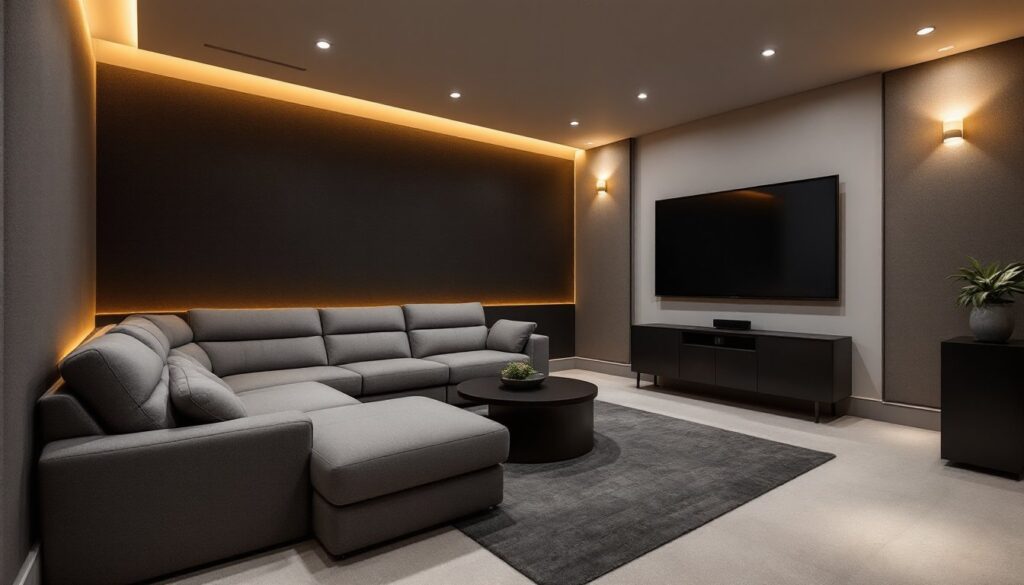
L-Shaped Sectionals are the most versatile. One long side faces the screen while the shorter side fills a corner or perpendicular wall, maximizing seating capacity without unnecessary depth. This works well in rectangular rooms and seats 4-5 adults comfortably.
U-Shaped Sectionals surround a center console or coffee table, ideal for dedicated home theaters where the layout is fixed. They seat 6-8 people and create an intimate viewing environment, but require a larger footprint and won’t work in smaller bedrooms or living rooms doubling as media spaces.
Sectionals with a Chaise (a built-in ottoman or lounge extension on one end) let viewers stretch out fully. This hybrid between a sectional and a chaise works if you have corner space and don’t need extra seating: otherwise, it wastes room.
Modular Sectionals consist of independent pieces, a corner wedge, several armless chairs, and a chaise, that you arrange as needed. This offers flexibility but comes at a premium price and requires careful planning to ensure all pieces are covered if one needs repair.
Reclining vs. Fixed Sectionals: Which Is Right for You
Reclining sectionals dominate home theater spaces because they directly enhance comfort during long viewing. Each seat typically has an independent footrest or backrest that reclines to 160+ degrees, letting viewers find their ideal position without disturbing neighbors.
Fixed (non-reclining) sectionals are firmer, less mechanically complex, and easier to clean. They suit spaces where durability or frequent repositioning matters more than recline feature, though their comfort advantage diminishes during hour-long films.
Powered recline is convenient and quieter than manual systems, but adds $1,500-3,000+ to the price and requires an accessible electrical outlet. Manual recline via a handle or lever works reliably and costs less: the tradeoff is one extra hand movement to adjust, which matters little in casual use.
Consider your household: If you have young kids or pets that will jump on the sectional, a fixed model tolerates more abuse. If you’re a serious movie watcher or have mobility concerns, reclining is worth the investment.
Placement and Room Planning Tips
Once you’ve chosen your sectional, positioning determines whether the space feels functional or chaotic.
Always angle the sectional slightly toward the screen (15-20 degrees) rather than facing it dead-on. This reduces neck strain and reflects light more naturally. If you have a large U-shaped sectional, the center point should sit directly in line with the TV.
Cable management is critical. Run HDMI, speaker, and power cables through the wall (hire a licensed electrician if walls are load-bearing) or use cable raceways that mount to baseboards. Loose cords behind or under a sectional become tangled, create tripping hazards, and look unprofessional.
Lighting should not face the screen directly. Recessed ceiling lights on a dimmer, wall sconces flanking the TV, or LED strips behind the sectional work well. Overhead lights should be dimmable: glare on a large display ruins the viewing experience.
Allow 18-24 inches of clearance on all sides for cleaning, rearrangement, and air circulation. A sectional pressed tight against walls traps dust and makes vacuuming awkward.
Consider acoustics. A sectional absorbs sound, which is good for reducing echo, but hard surfaces (glass, tile) amplify it. If your room sounds hollow, add a rug or fabric wall panels to balance it. 16 best sectionals are reviewed across different styles to help you see real-world placements in various room types.
Budget-Friendly and Premium Options
Home theater sectionals range from $1,200 for a basic manual-recline piece to $8,000+ for fully loaded powered models with premium leather and premium frames.
Budget Options ($1,200-2,500): Entry-level sectionals use standard foam cores and basic recline mechanisms. They’re suitable for guest rooms or casual use. Fabric choices are limited, and durability may decline after 5-7 years of daily use. Retailers like Wayfair and Article carry decent budget-friendly options in this range.
Mid-Range ($2,500-4,500): These offer better frame construction (usually solid wood), improved cushioning density, and reclining flexibility. You’ll find sectionals from brands that stand behind their products with warranties. Powered recline starts appearing here, though often limited to one or two seats.
Premium ($4,500-8,000+): Top-tier sectionals use premium leather, hardwood frames, fully powered multi-zone recline, and integrated tech (surround lighting, built-in speakers, tablet-control functions). These pieces warrant a 10-year warranty and typically last 15+ years with care.
Don’t assume higher price always means better value. A $3,000 sectional with excellent foam density and a solid wood frame may outperform a $5,000 model loaded with unnecessary gadgets. Prioritize frame quality, cushion density, and recline reliability over flashy features. Luxurious sectional designs showcase premium construction if you’re shopping higher-end pieces. Some retailers offer financing plans (0% for 12-24 months), which can ease the cost of a quality purchase.
Budget-conscious buyers should check clearance and floor-model sales from local furniture stores, you can save 30-40% and inspect the piece in person, reducing return risk.
Making Your Final Choice
Selecting a home theater sectional boils down to matching your room’s constraints, your household’s needs, and your budget realistically.
Invest time in a in-store sit test if possible. A 15-minute recline is nothing like a 2-hour movie marathon, feel how the seat supports your back, how far the footrest extends, and whether the depth is comfortable for your frame. Check how independently the sections recline and whether the controls are within arm’s reach without fumbling.
Verify delivery terms and assembly. Some vendors include free white-glove delivery and setup: others charge $300-600 for haul-away of your old furniture and assembly. Factor this into your total cost.
Read the warranty carefully. A 10-year structural warranty on the frame is standard for quality pieces: shorter warranties hint at lower build quality. Recline mechanisms and electronics often carry only a 2-year warranty, which is typical.
Finally, don’t buy in a rush. A sectional is a long-term investment. Take photos of your room, measure again, and sleep on your decision overnight. Transformative sectional designs can spark fresh ideas if you’re still undecided on layout. Your future self will thank you for the thoroughness.