Table of Contents
ToggleSingle wide mobile homes present a unique challenge for kitchen design. Unlike traditional homes where kitchens can sprawl across 150+ square feet, mobile home kitchens often operate in 70–100 square feet, sometimes less. That constraint, but, isn’t a dealbreaker: it’s a design puzzle that forces smart decisions. Homeowners and DIY enthusiasts working within these tight parameters discover that strategic layout planning, intentional storage, and clever material choices can transform a cramped galley into a surprisingly functional and even pleasant cooking space. This guide walks you through the most practical single wide mobile home kitchen layouts, renovation strategies, and storage hacks that actually work.
Key Takeaways
- Single wide mobile home kitchen layouts typically operate in 70–100 square feet and require strategic planning to maximize the galley or L-shaped configuration within tight 7–10 feet width constraints.
- The galley kitchen design minimizes walking distance and clusters the work triangle efficiently, making it the most practical single wide mobile home kitchen layout without requiring major structural changes.
- Vertical storage solutions like pull-out pantry cabinets, wall-mounted shelving, and under-cabinet LED lighting can triple storage capacity and usability in compact spaces at $200–$600 per upgrade.
- Corner cabinets in L-shaped layouts waste up to 36 square inches of access unless you invest in carousel pull-out systems ($200–$400) or repurpose them for occasional-use items.
- Cosmetic renovations—including cabinet refacing ($1,500–$3,000), countertop replacement, and lighting upgrades ($200–$500)—deliver the highest return on investment before undertaking expensive plumbing or electrical work.
- Always check local building department requirements before modifying walls, relocating appliances, or adding electrical outlets, as mobile home jurisdictions enforce stricter permitting rules than traditional homes.
Understanding Single Wide Mobile Home Kitchen Constraints
Single wide mobile homes typically measure 12–16 feet across, with kitchen footprints squeezed into roughly 7–10 feet of width and 8–12 feet of depth. Wall space is at a premium: plumbing and HVAC vents often dictate where appliances can be placed, leaving little flexibility. Ceilings usually sit at 7 feet 6 inches to 8 feet, and the combination of narrow floorspace and lower soffits creates a real sense of confinement if layouts aren’t planned carefully.
Construction materials in older units are frequently lightweight aluminum framing with minimal insulation, so any renovation work, especially plumbing or electrical, may trigger permitting questions depending on your jurisdiction. Always check with your local building department before moving walls, adding outlets, or relocating major appliances. Load-bearing considerations are different in mobile homes than stick-built houses, so avoid removing or significantly cutting into wall studs without professional consultation.
The upside? These kitchens are compact enough that a well-planned layout can put everything within arm’s reach. Cabinet refacing, strategic appliance sizing, and vertical storage solutions can yield surprising results without major structural upheaval.
Galley Kitchen Design: The Most Common Layout
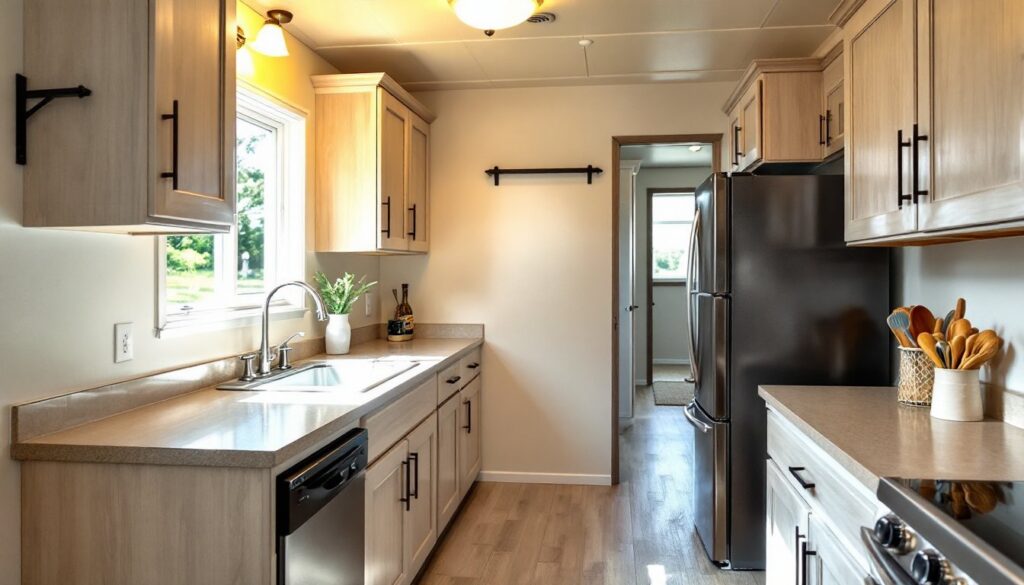
The galley layout, two parallel runs of cabinets and countertop facing each other across a narrow aisle, is the standard for single wide mobile homes and for good reason. It minimizes walking distance and clusters the work triangle (sink, stove, refrigerator) into an efficient line. Most single wide kitchens are already galley-shaped by default, so this design is your baseline.
In a typical mobile home galley, one side holds appliances and the other holds prep and storage. The sink often sits along the exterior wall to access supply and drain lines. Some units place the refrigerator at one end to anchor the layout and break up cabinet monotony. Counter depth is usually 24 inches nominal (closer to 23.5 inches actual), which is tight but workable if you’re disciplined about clutter.
Advantages and Practical Applications
The galley excels in mobile homes because it doesn’t waste wall space. Every linear foot does double duty. No wasted corner dead zones. Foot traffic flows in one direction, and you’re never more than a step or two from any appliance or storage.
For renovations, a galley is forgiving. You can modernize it by swapping cabinet doors, replacing countertops, or upgrading the stove without relocating plumbing. Small kitchen solutions that maximize workflow emphasize the galley’s efficiency when done right. A fresh coat of paint on walls, new lighting (under-cabinet LED strips are game-changers in a galley), and open shelving in place of a few upper cabinets can breathe life into the space without major construction. The key is keeping sightlines clear, avoid visual clutter that makes a galley feel narrower.
L-Shaped Kitchen Configurations for Extra Workspace
Some single wide kitchens, particularly newer models or those that border a dining nook or breakfast bar, can support an L-shaped layout. This happens when counter space runs along two perpendicular walls, usually with the sink or stove at the corner. An L-shape opens sightlines and breaks up the tunnel feel of a pure galley.
The trade-off is the corner cabinet itself. That 36-by-36-inch corner is notoriously difficult to access unless you’re willing to sacrifice inside depth or install a carousel-style pull-out rack (a worthwhile investment for corner cabinets). Alternatively, you can use that corner as a trash-and-recycling zone or a dedicated small-appliance staging area that doesn’t need daily access.
Optimizing Corner Usage
If you’re converting a galley to an L-shape, the corner becomes your critical decision point. A full-height, pull-out carousel shelf system (like LeMans-style corners) costs $200–$400 installed but recovers almost all lost corner volume. If budget is tight, accept that the corner is deep storage for occasional-use items, slow cookers, pressure canners, serving platters, and keep daily-use stuff in easier-to-reach linear cabinets.
Another angle: use the corner for a beverage cooler or wine fridge if space permits, or plumb it for a second prep sink (second sinks are becoming more common in small-footprint kitchens). The cost of rough-in plumbing and a stainless prep sink is usually $400–$600 but justifies itself if two people cook regularly in a compact space.
Storage Solutions and Space-Saving Strategies
Storage is the Achilles’ heel of mobile home kitchens. Standard cabinet runs in a 10-by-9-foot kitchen yield roughly 35–45 linear feet of cabinetry, which sounds adequate until you account for appliances, the window, and a doorway or two. You’re left with maybe 25–30 feet of actual storage.
Vertical storage is non-negotiable. Open shelving above cabinets, wall-mounted magnetic strips for knives, pegboards for pots and pans, and under-cabinet hooks free up precious drawer and cabinet real estate. Pantry space is critical: mobile home kitchens rarely have pantries, so a tall, slim pull-out pantry cabinet (18 inches wide, floor-to-soffit height) tucked in a corner can store 3–4 times what a standard 36-inch upper cabinet holds. Cost runs $300–$600 for a decent model, and installation is straightforward if you have stud access.
Drawer dividers and in-cabinet organization systems (not expensive, $20–$60 per drawer) dramatically improve usability. A sliding drawer insert or tiered shelf liner can double effective storage in a single drawer. Small space living ideas highlight multi-functional furniture: consider a kitchen island with storage and seating if you have 3 feet of floor space to spare. A 24-by-36-inch island with open shelving below and a butcher-block top adds workspace and cooking surface without permanent footprint overhead.
Refrigerator sizing is another lever. Many mobile homes ship with 18-cubic-foot refrigerators (too small for families). A compact but deep 22-cubic-foot unit (still mobile-home friendly in width) adds capacity without widening the footprint. Over-the-fridge or corner space that’s normally dead zone can be reclaimed for open baskets of pantry overflow, small appliances, or dish racks.
Renovation Tips for Improving Your Mobile Home Kitchen
Cosmetic renovations often deliver the most bang for effort in a mobile home kitchen. Painting cabinet faces and replacing hardware costs under $200 in materials and labor and transforms the visual weight of the space. If cabinets are solid wood or plywood beneath the laminate veneer (common in older units), cabinet refacing, replacing just the doors and drawer fronts, costs $1,500–$3,000 and bypasses the need to remove and reinstall the entire cabinet run.
Countertop replacement is practical: laminate countertops are standard and are simple to replace if you’re comfortable with a circular saw and hand tools. Measure and cut laminate templates from cardboard first to avoid costly mistakes. Alternatives like butcher block or solid-surface materials add visual warmth, though butcher block requires regular oiling in a wet environment. Quartz or other engineered stone is pricier ($40–$60 per square foot installed) but durable and low-maintenance.
Plumbing and electrical upgrades require more care. Adding a second prep sink, moving the main sink, or upgrading to a higher-amperage service panel typically needs a licensed electrician and plumber, respectively, and may require permits. Kitchen and bathroom remodel inspiration showcases how thoughtful finishes elevate smaller spaces: focus on durable, cohesive finishes (flooring, backsplash, fixtures) rather than spreading budget thinly across multiple cosmetic changes.
Lighting is underrated but transformative. Mobile home kitchens often rely on a single ceiling fixture, which casts shadows and feels cramped. Add under-cabinet LED strips ($15–$40 per strip, plug-in or hardwired), recessed downlights if the soffit allows (verify clearance to roof framing), and a pendant light or two above a small island or bar area. Total cost is usually $200–$500, and the improvement in usability and ambiance is immediate.
Always confirm permit requirements before starting renovation work, especially if moving appliances, modifying walls, or adding electrical outlets. Mobile home jurisdictions vary widely on which projects trigger inspections.